Libation
Lots of talk of backing up and stripping DRM from Kindle books lately.
In my associated adventures I found this app for doing similar with your Audible library.
Bytes that get stuck in your teeth.
Lots of talk of backing up and stripping DRM from Kindle books lately.
In my associated adventures I found this app for doing similar with your Audible library.

My photo book tour continues with Australian Lustre.
Reading it transports me to every country town I’ve ever visited.
I enjoyed the juxtaposition of big things and suburbia the most.
It’s undeniably Australian and well worth a look.

I’m working on reading more photography books.
So, yesterday, I grabbed Colin Greenwood’s How to Disappear while I was out and about1.
Colin gets some great candids of the recording and touring experience.
His collection of photos is another ode to the power of a plastic Yashica T4.
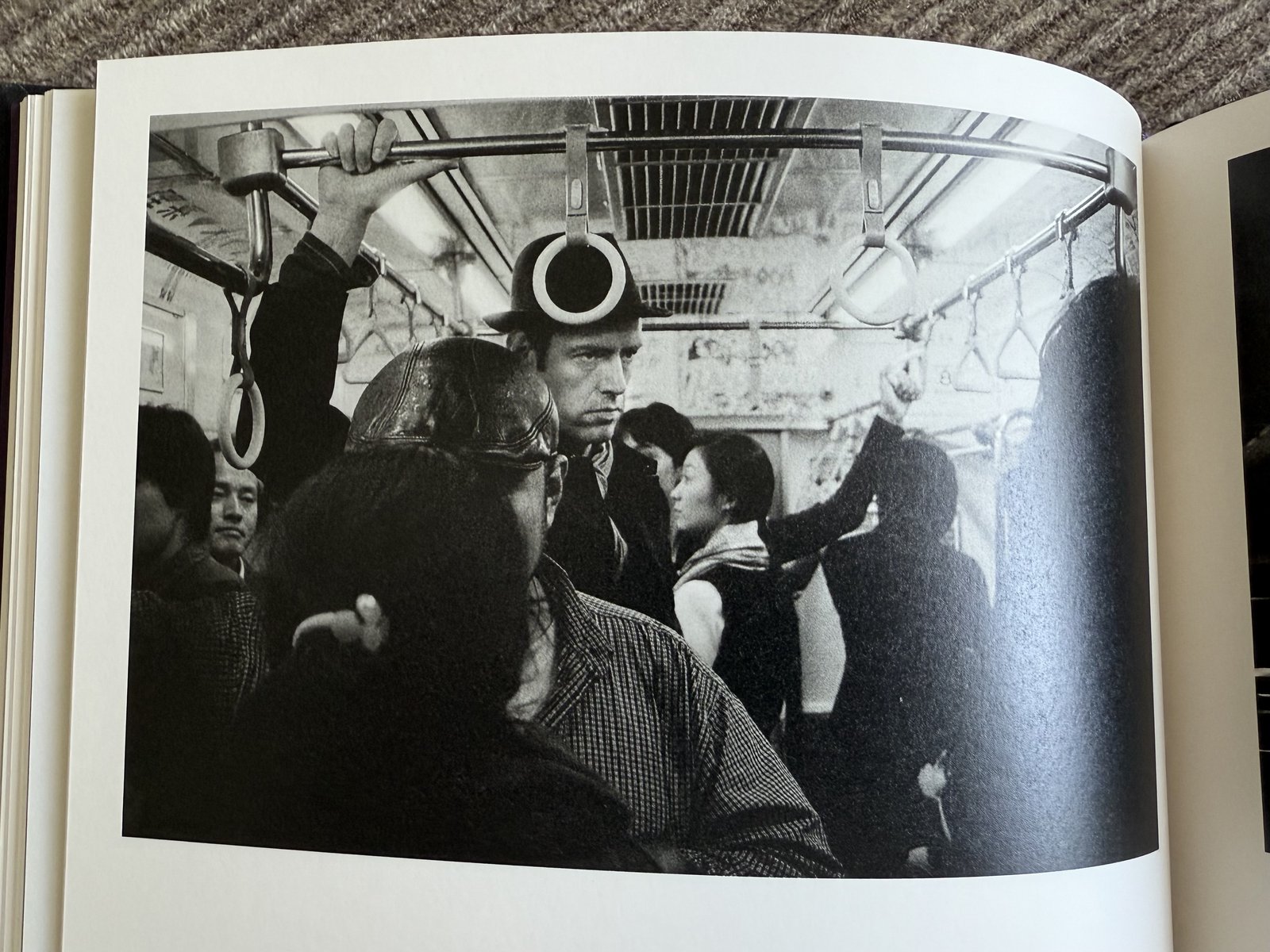



Combining Radiohead and photography is catnip for me. ↩︎
The Friction project collects strategies for removing and adding friction so organisations function better.
Here are some choice cuts.
We soon learned that the goal of becoming a “frictionless organization” is misguided. Yes, the people who run most organizations create too much debilitating friction. But many also ignore the opposite side of the coin, making the wrong things too easy for employees and customers.
…
The harder we humans work at something, and the more we suffer, the more we come to value it (independent of its objective value) because of our need to justify all that work to ourselves and others.
In August 1940, as his country prepared for waves of attacks by German planes, Winston Churchill set out to address a different enemy. In his 234-word “Brevity” memo, 1 he implored his colleagues to “see to it that their Reports are shorter.” The British prime minister urged them to write “short, crisp paragraphs,” to move complex arguments or statistics to appendices, and to stop using “officialese jargon” and “woolly phrases.” A few months later, Churchill asked bureaucrats to hear his “cry of pain” and remember that “the number and length of messages sent by a diplomat are no measure of his efficiency.”
…
Rohm and Haas teaches its leaders that when they face a decision with broad and enduring consequences, taking speedy, narrow, and impulsive action is a recipe for disaster. Instead, Rohm and Haas preaches the Five Voices method. Before making a big decision, leaders slow down, do careful research, and talk to people until they understand five key stakeholders: the customer, the employee, the owner, the community, and the process.
…
“There comes a point where we need to stop just pulling people out of the river. We need to go upstream and find out why they’re falling in.”
If you are more powerful than your colleagues or customers, you are at risk of being clueless about their friction troubles, and of how you add to their misery. Beware of such power poisoning.
…
“If you are the HIPPO, don’t be a hippo, be an elephant.”
i.e. have big ears rather than a big mouth.
…
The lesson, and perhaps the irony, of Tsedal and Sebastian’s study is that executives who deferred to subordinates moved up the pecking order faster than those who refused to bend to their underlings’ will and wisdom: Leaders were granted more power because they gave it away.
…
After Lindy’s team analyzed more than a hundred hours of observations and sixty interviews from ten start-ups, they found the best CEOs shifted between accentuating and flattening the hierarchy—and the worst ones treated the hierarchy as static.
When one CEO was asked if her team was flat or hierarchical, she explained, “You have to have both. If you don’t have that flat piece where you’re taking everyone’s input, you’re dropping expertise on the table, and if you don’t have a hierarchical piece, then you’re just heading in all different directions.” The best leaders “activated” their authority to squelch destructive conflict, when discussion and debate became repetitive, and time pressure necessitated immediate decisions. These flexible leaders “flattened” the hierarchy when creativity, problem-solving, and buy-in were top priorities.
People tend to add stuff to their work environments.
One of the more effective ways of removing destructive organisational friction is to instead subtract things.
Onboard People to the Organization, Not Just the Job – Friction fixers who are intent on building a culture of coordination go beyond training newcomers to perform their narrow job responsibilities. They teach newbies how their work meshes with that of others, how the organization functions, and how to use the system to help them do their work. This saves a lot of trouble down the road.
…
Build Roles and Teams Dedicated to Integration – The idea here is to create specialists in your organization who are charged with integrating the once-disconnected roles, silos, and action. The Cancer Center created a centralized CarePoint program to reduce the cancer tax for patients and their families. CarePoint administrators use their knowledge and relationships to smooth patient journeys, and when problems arise, patients and families have a place to turn for help.
…
Fix Handoffs – Bungled information exchanges between people in different roles, silos, shifts, and time zones are among the most potent causes of coordination snafus.
Anthropologists and sociologists document how, when something ends, people benefit from pausing to reflect on the past, what they’ve lost, what comes next, and what matters most and least to them—and to support one another. Be it the end of a meeting, a day, a game, a career, a life, a team, a project, or an organization.
…
Patty McCord, who was Netflix’s chief talent officer for the company’s first fourteen years, told us, “The most important role I played at Netflix was, at the end of every executive meeting, to say, ‘Have we made any decisions in the room today, and if we have, how are we going to communicate them?’”
The third leadership principle is organizational design is the highest form of friction fixing. Most of the time, leaders don’t have the luxury of designing a workplace from scratch. So most must find ways to manage in existing and imperfect systems.
Adam Grant stuffs Hidden Potential with loads of anecdotes and research on growth, learning, and performance.
Excellence relies less on our natural talent.
It’s more about proactiveness, collaboration, discipline, and determination.
It’s never too late to build character traits in life to get this benefit.
There are lots of different ways to learn. Mixing them up is worth it.
Sometimes working in your least preferred way is better for learning as it forces you to work harder.
Ask loads of questions and take notes. Seek and soak up information.
Asking others for one thing you can do to improve will help surface up lessons and ways to improve faster.
Take small steps or slices and build gradually.
Not aiming for perfection can unlock good solutions.
Adding play makes practice more effective.
Also ensure you take regular breaks as that’s a more effective way of internalising lessons and practice.
Progress isn’t linear.
A rut or plateau or stagnation isn’t a signal you’ve hit your peak. It’s a chance to back up and try a different approach.
You will need to regress to progress.
Pooling study resources in a group leads to higher collective outcomes.
The tutor effect: teaching others improves your understanding.
Being doubted by experts can have a demoralising effect. Being doubted by non-experts can drive higher performance.
When someone ignorant doubts you it feels like a challenge.
If credible people believe in us it is a signal that we should believe in ourselves.
It’s more important to be good ancestors than dutiful descendants.
The Finnish education system was focused on early intervention.
All kids are given attention—not just those that show early potential.
Teachers can stay with student for multiple years in a row—this is known as “looping”.
Teachers get more break time so they can better prepare.
Play leads to a love of learning.
The Psychology of Money covers how doing well with money is more dependent on your behaviour than what you know.
Here are some of the topics that stood out to me.
Wealth is income not spent. An option not yet taken to buy something later. Its value lies in giving you options and flexibility.
“Does this help me sleep at night?” is the best universal guide post of all financial decisions.
If you want to do better as an investor the best thing you can do is increase your time horizon. Time is the most powerful force in investing it makes little things grow big and big mistakes fade away.
Use money to gain control over your time because not having control of your time is a powerful and universal drag on happiness.
The ability to do what you want, when you want, with who you want, for as long as you want to, pays the highest dividend.
Only the paranoid survive. We can’t assume that yesterday’s success will translate to today.
What differentiates those who succeed is survival, not growth or brains, the ability to stick around for a long time.
Having an edge and surviving are two different things, the first requires the second, you need to avoid ruin at all costs.
Appreciate the following:
A small number of events can be responsibile for the majority of outcomes.
All big wins come in the distribution tails. Grab a broad set of things and wait for the winners to emerge. Most will be worth nothing, a very few may win big.
Art collectors grabbed portfolios of art across different emerging artists. Most of their collection was worthless, some had a bunch of Picassos.
Much of investing is out of your control. Personal savings and frugality are within your control and is effective now and in the future.
Have a buffer for the inevitable surprises life will throw at you.
History is littered with good ideas taken too far which makes them indistinguishable from bad ideas.
The only way to deal with unknowns is to increase the gap between what you think will happen from what can happen while still leaving you able to fight another day.
Ben Graham: “The purpose of the margin of safety is to render the forecast unnecessary.”
Margin of safety is the only effective way to navigate a world dominated by odds and not certainties.
Even a five percent chance of ruin is not worth the risk over the long term. Leverage is something that can push routine risks into areas where they can produce ruin.
Think of your own money as barbelled. Take risks with one portion and be terrified with the rest.
Plenty in here I haven’t read that I’ll add to my list.

The Trusted Advisor is a book focused on trust and relationships in professional services but feels applicable to any work partnership.
I’ve collected a few choice quotes below.
To make anyone believe something about you, you must demonstrate, not assert. What you claim about yourself, your colleagues, or your firm will always be received skeptically, if it is listened to at all. In Emerson’s words, “Your actions speak so loudly, I cannot hear what you are saying,”
We must listen effectively, and be perceived to be listening effectively, before we can proceed with any advisory process. Cutting to the chase without having earned the right to do so will usually be interpreted as arrogance.
…if the listener breaks up our sense of story (insists on interrupting, or rearranging, or imposing his or her own sense of story line), the meaning we intend is disrupted. It feels inappropriate when someone jumps to a conclusion, or misses a connection, or gets things out of sequence. All these are forms of not “getting it.” Good listening respects the speaker by respecting the sequence of the story he or she chooses to tell us.
At the core of earning someone’s trust is convincing them that you are dealing with them as a human being, and not as a member of a group or class or subset. Accordingly, as you listen to a client talk, the question on your mind should be, “What makes this person different from any other client I’ve served? What does that mean for what I should say and how I should behave?”
Unfortunately, this is hard work. The natural tendency for most of us is to do the exact opposite: We listen for the situations we recognize, so that we can draw upon past experience to use the words, approaches, and tools that we already know well. It’s the way most of us work, but it doesn’t always serve us well.
So much of our time is spent focusing on ourselves, and so much of other people’s time is spent focusing on themselves, that it is a rare and surprising event whenever someone breaks the veil. Sincere interest in another person comes across strikingly simply because it is unusual.
One of the biggest mistakes that advisors make is to think that their client always wants their advice. This is dangerously wrong.
…
What the advice receiver wanted was a combination of a sympathetic ear, emotional support, an understanding of the difficulties faced, and the opportunity to collect his or her own thoughts by talking them through in a non-threatening environment.
It’s near impossible for any professional to hide his or her true motives, whatever they may be. And if those motives are rooted in naked self-interest, they will be duly noted and reciprocated. We are not loyal to self interested people we don’t trust them. Which means we are always likely to leave them for a better price-or for someone we actually trust.
Which in turn means longterm success is compromised by such behaviour. And since the long term is nothing but a series of short terms, short-term results themselves are being harmed, not improved, by slavish adherence to short-term goals.
The truth is, both long-term and short-term results are maximised by long-term behaviour on our part. The old Goldman Sachs mantra expressed this well: “We are longterm selfish.” It is in the long-term that our goals and our clients’ goals merge and that merging reveals itself over a series of short terms.
We suggest that there are five distinct steps in the development of a trusted relationship. In this chapter we will define each of these In the succeeding chapters, we will explore each stage in detail.
Expressed in their simplest form, the five stages are:
- Engage. “Let’s talk about…”
- Listen. “Tell me more…”
- Frame. “So the issue is…”
- Envision. “Let’s imagine…”
- Commit. “I suggest we…”
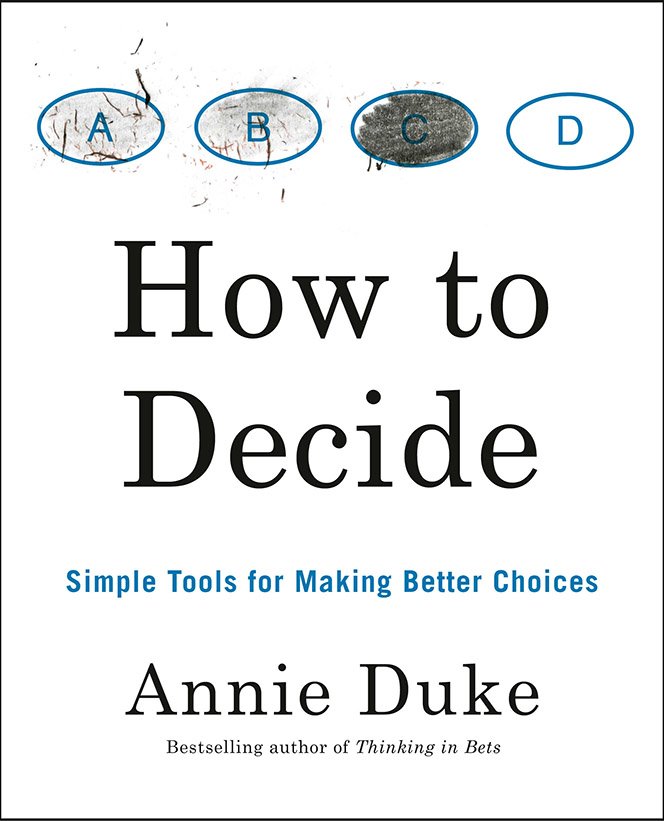
How to Decide digs into the characteristics of decision making and provides tools for making better decisions.
I took away loads of things to try and recommend the book.
Below are some of the salient points that stood out to me.
Two things determine how your life turns out: luck and the quality of your decisions. You can only control the second.
Any decision is essentially a prediction about the future.
When making a decision your objective is to choose the option that gains you the most ground in achieving your goals, taking into account how much you’re willing to risk.
You need to develop a decision process that improves your decision quality and helps you sort your decisions to identify which are larger and which are smaller.
A good decision tool seeks to reduce the impact of cognitive biases.
Determining whether a decision is good or bad means examining the quality of the beliefs informing the decision, the available options, and how the future might turn out given any choice you make.
Using the quality of the outcome to judge the quality of the decision causes you to learn the wrong lessons and is called resulting.
Imperfect information is a kind of uncertainty that interferes before a decision.
Luck is a kind of uncertainty that can interfere after the decision is made but before the outcome.
Chasing certainty causes analysis paralysis.
Hindsight bias is the tendency to believe an event, after it occurs, was predictable or inevitable.
Memory creep is when what you know after the fact creeps into your memory of what you knew before the fact.
Tilt is when a bad outcome causes you to be in an emotionally hot state that compromises the quality of your decision making.
Quitting is a powerful tool for defraying opportunity cost and gathering intel, intel that will allow you to make higher-quality decisions about the things you decide to stick to.
There are quite a few in the book. Here are some that resonated with me.
Use a Knowledge tracker to avoid hindsight bias.
Use Decision trees for evaluating past decisions and improving the quality of new ones.
Repeating options are when the same type of decision comes up over and over again you get repeated chances to choose options, including options you may have rejected in the past.
When a decision is hard, that means it’s easy. When you’re weighing two options that are close it can feel like the decision is difficult. The decision is actually easy, because whichever one you choose you can’t be that wrong since the difference between the two is so small.
The lower the cost to quit, the faster you can go, because it’s easier to unwind the decision and choose a different option, including options you may have rejected in the past.
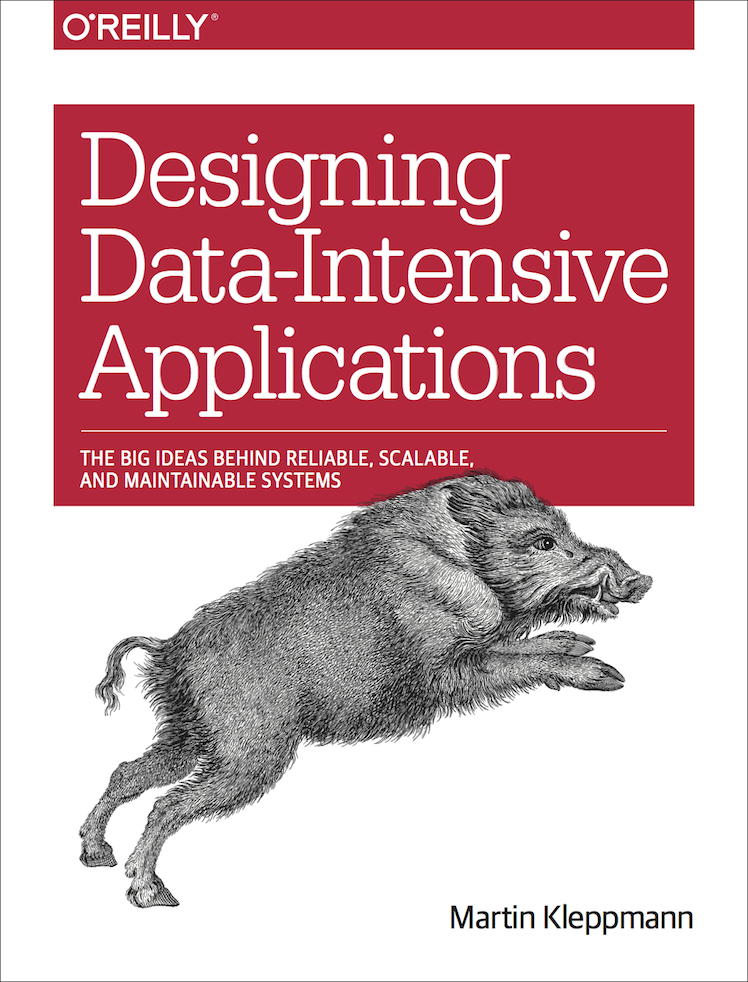
This book surveys data storage and distributed systems and is a fantastic primer for all software developers.
It starts with naive approaches to storing data, quickly builds up to how transactions work, and works up to the complexities of building distributed systems.
I particularly enjoyed the chapter on stream processing and event sourcing. It contrasts stream processing to batch processing and highlights many of the challenges of these approaches and explores options for addressing them.
A long list of sci fi books to read.
Always interesting to see the books he recommends.
Programming well is hard. Here are a few books that have helped me improve that I recommend.
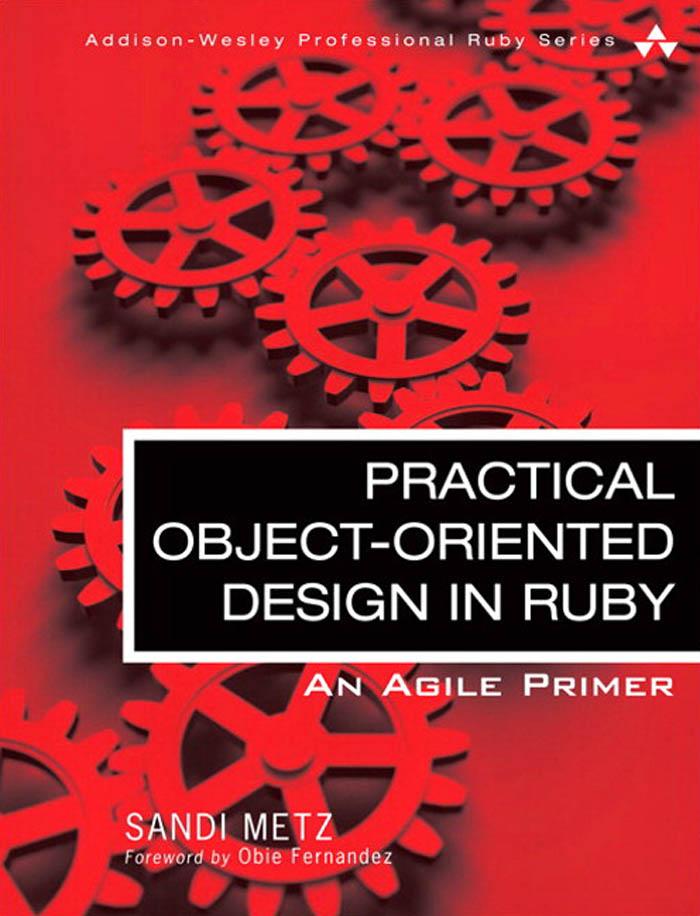
This contains plenty of great advice even if you don’t code in Ruby. It focusses in on the message passing aspect of OO and how to structure your code around that ideal whilst keeping it amenable to change.
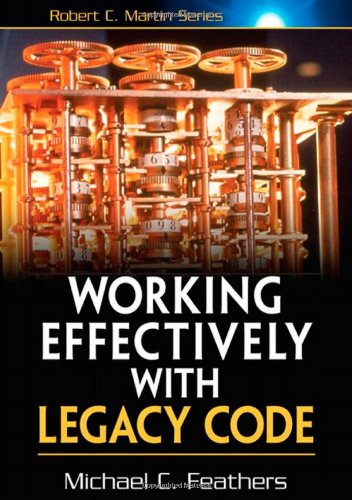
This is really about all code and is full of strategies to isolate and deal with problematic code in large untested code bases.
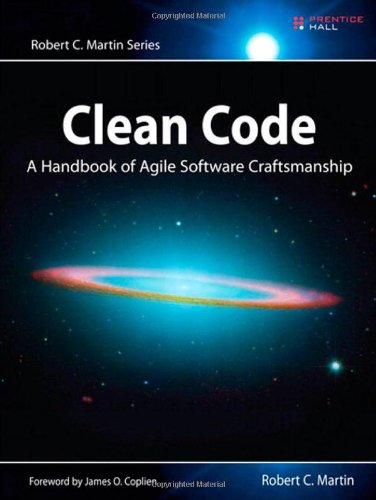
A meditation on what makes code “good”. General advice that covers many aspects of code including readability, clarity of intention, and separation of responsibilities.
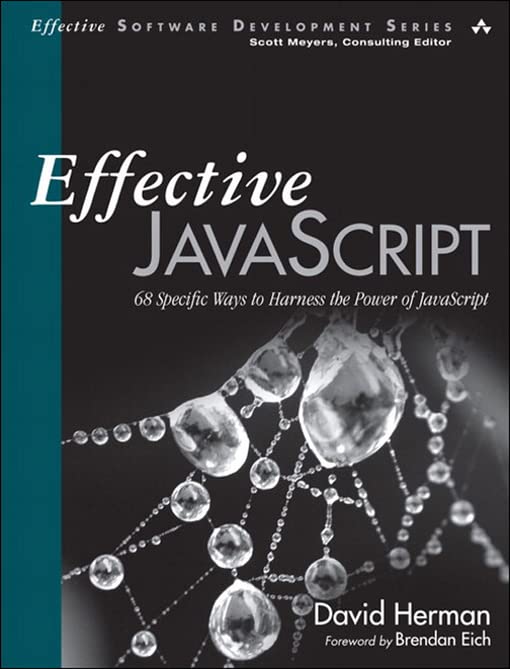
Short, sharp, and to the point advice for writing Javascript. Points out the rough edges in the language and gives you concise advice on how to deal with them.

A touch dated in areas but the core principles it espouses are still good and will hold true for a while to come.

A book focussed on “the last mile” in software. Getting your code out the door and setup in a way that you can monitor and change it. It also provides interesting techniques for dealing with production issues in distributed systems such as cascading failures.

A look at techniques to improve the readability and style of your code. Tips on elimating conditionals, using null objects, and more.
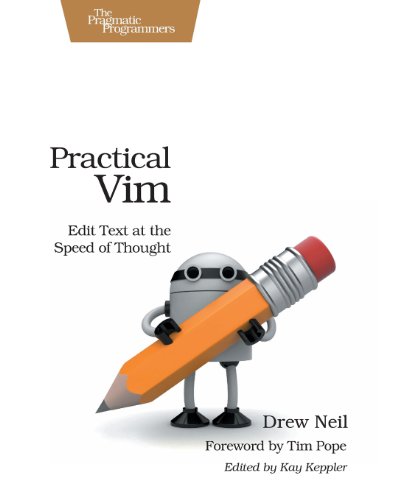
I’ve used Vim for a long time and this book taught me plenty. A must read if you use Vim as your editor.
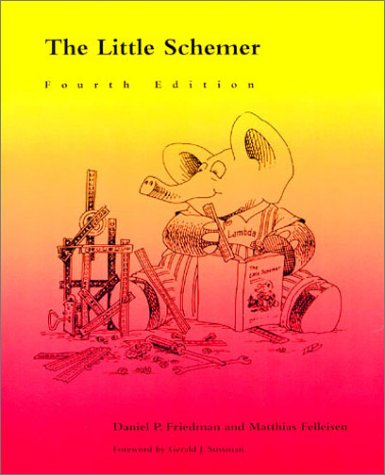
A great way to learn recursion and some Lisp.