Where You Should Live
Via Kottke:
Your 10-minute radius matters more than almost anything else about where you live: Think about what you can get to in ten minutes without making it a whole thing.
Bytes that get stuck in your teeth.
Via Kottke:
Your 10-minute radius matters more than almost anything else about where you live: Think about what you can get to in ten minutes without making it a whole thing.
David A. Patterson:
I started my career at Hughes Aircraft in 1972 while working on my Ph.D. at the University of California, Los Angeles (UCLA). After designing airborne computers for four years, I graduated and then taught and did systems research at UC Berkeley for the next 40. Since 2016, I’ve helped Google with hardware that accelerates artificial intelligence (AI).
At the end of my technical talks, I often share my life story and what I’ve learned from my half-century in computing. I recently was encouraged to share my reflections with a wider audience, so I’ve captured them here as 16 people-focused and career-focused life lessons.
Donella Meadows (via James Clear):
There is too much bad news to justify complacency. There is too much good news to justify despair.
Life wisdom from The Marginalian.
Jim Grey:
Relationships matter if you want to advance. It took me until about ten years ago to start to understand how building relationships across any company I work for is critical if I want to move up, and even remain employed when times are tough. I’ve found that being relentlessly helpful to others, even in things that aren’t strictly your responsibility, keeps you as someone everybody wants on the team. And when you push for a promotion, you have a base of people across the company who think you’re awesome. It greases the skids.

When people ask me what it takes to get recognised at work and progress in their careers, I generally suggest two directions they can pursue.
Option one: Demonstrate deep expertise in an area that is strategically important to the business.
Option two: Demonstrate the ability to solve meaningful problems. The broader the problem and the higher the ambiguity, the more valuable you are if you can drive it to a positive outcome. This is especially relevant in dynamic environments where changing conditions make people with adaptable skills who can work across a variety of contexts valuable.
Career maps and expectation matrices are very useful, but sometimes people can get lost in the details. I like these rules of thumb as a way to help people keep their eyes on the prize.
Dynomight:
Time seems to speed up as you get older. And you wonder—is it biological, or is it because life had more novelty when you were a child? Travel partly answers this question—with more novelty, time slows way down again.
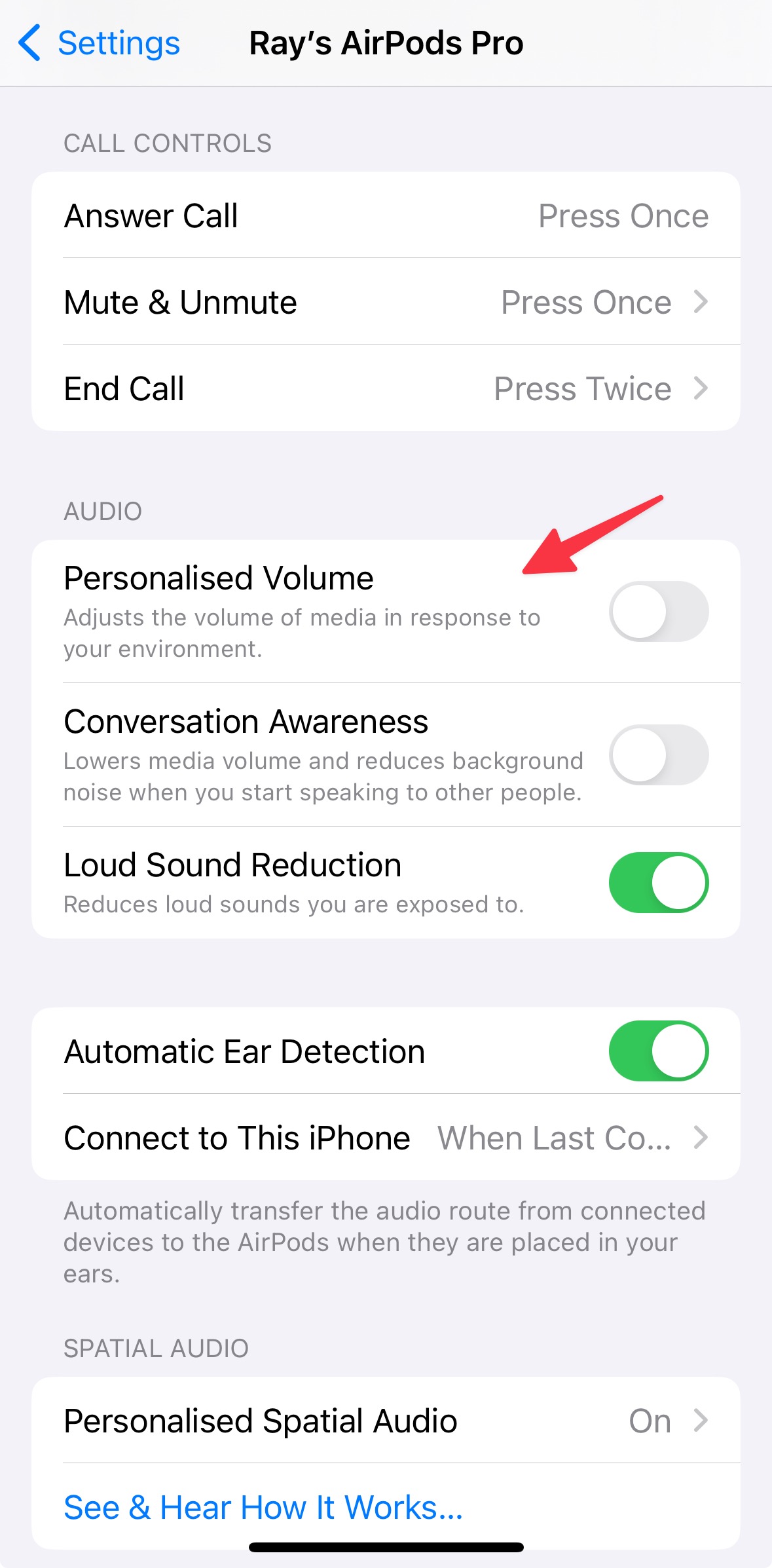
Adaptive Audio on iOS 17 feels like an improvement over Transparency mode.
One thing that was driving me nuts however, was that whenever I’d put my AirPods Pro in, the volume would get dropped super low.
I thought it was Adaptive Audio doing it but in fact it was the Personalized Volume feature.
I’ve switched that off and things work a treat.
David Cain:
One financial lesson they should teach in school is that most of the things we buy have to be paid for twice.
There’s the first price, usually paid in dollars, just to gain possession of the desired thing, whatever it is: a book, a budgeting app, a unicycle, a bundle of kale.
But then, in order to make use of the thing, you must also pay a second price. This is the effort and initiative required to gain its benefits, and it can be much higher than the first price.
…
But no matter how many cool things you acquire, you don’t gain any more time or energy with which to pay their second prices—to use the gym membership, to read the unabridged classics, to make the ukulele sound good—and so their rewards remain unredeemed.
I pretty much highlighted the lot.
Richard Hamming giving advice to researchers in 1995, plenty of which serves as general career advice.
Here’s a selection:
Chris Rackliff:
Speaking of lifting others up, your core group of friends can make or break your life. And your participation can make or break theirs as well.
Matt Linderman:
Instead of working with a thing you love, think about how to work in a way you love.
Embrace the power of compounding.
For the security conscious and paranoid.